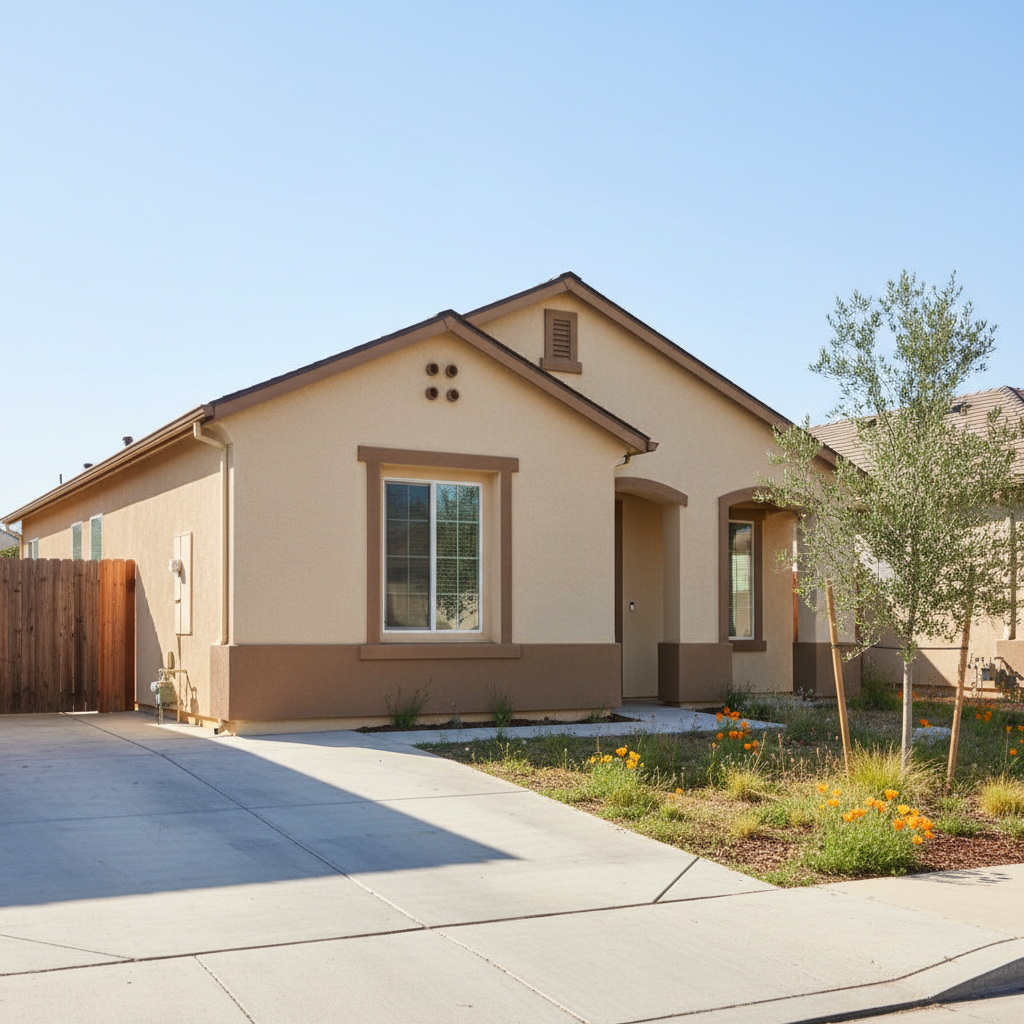
Alright, let's talk about EIFS, or Exterior Insulation and Finish Systems, and what it's actually going to cost you here in Clovis. I get asked about this a lot, and for good reason. It's a fantastic system for our Central Valley climate, offering some serious energy efficiency, especially when those summer temps hit triple digits. But let's be real, you want to know the bottom line, not just the benefits, right?
What Really Drives EIFS Installation Costs?
You'd think it'd be a simple per-square-foot number, wouldn't you? Not quite. There are a few big factors that push the price up or down. I've seen it all, from straightforward jobs to ones that make you scratch your head.
- The Type of EIFS System: There are different classes of EIFS. The most common for homes around here is Class PB (polymer-based). It's got a thin base coat, mesh, and then the finish. Then you've got Class PM (polymer-modified), which is thicker, more like traditional stucco in how it's applied, and generally costs more because of the materials and the labor involved.
- The Size and Complexity of Your Home: This is a big one. A flat, simple wall is much easier and quicker to cover than a house with a bunch of architectural details – think gables, dormers, arches, or a ton of windows. All those ins and outs mean more intricate work, more cutting, and more time for the crew. Higher walls or hard-to-reach areas also mean we might need more scaffolding or specialized equipment, which adds to the cost.
- Material Choices: The insulation board itself can vary. Expanded Polystyrene (EPS) is common, but you can also get Extruded Polystyrene (XPS) or even mineral wool, which have different costs and R-values. Then there's the finish coat – different textures and colors can have different price points. High-quality materials that offer better durability and insulation will naturally cost more.
- Substrate Preparation: Is this a new build or are we re-siding? If we're going over existing siding or dealing with an older home, there might be prep work like removing old materials, repairing sheathing, or upgrading the air barrier. This can add 10-15% to the overall cost, but it's crucial for a proper installation and warranty.
- Drainage System: Modern EIFS systems, often called EIFS with Drainage, include an air/water-resistive barrier and a way to drain any incidental moisture that gets behind the system. This is a smart choice, especially in our climate where we get those heavy winter rains followed by intense summer heat. It adds a layer of protection, but also a layer of cost.
- Labor Rates: This is a significant portion of the total cost. Clovis labor rates are competitive, but skilled EIFS installers are worth their weight in gold. Proper installation is key to avoiding issues down the road.
Typical EIFS Installation Cost Ranges in Clovis
Alright, let's get to some numbers. Based on what I've seen and what's out there, you're generally looking at:
- Materials: Expect to pay anywhere from $3 to $7 per square foot for EIFS materials. If a contractor can get bulk pricing, that'll help you out.
- Labor: Labor costs typically fall between $4 and $9 per square foot.
So, combining materials and labor, for a standard Class PB EIFS system on a residential home with average complexity, you're usually looking at about $8 to $18 per square foot.
- Lower End ($8-$12/sq ft): This would be for simpler projects, like a small addition or a very straightforward commercial facade with flat walls, easy access, and standard 1-inch insulation.
- Mid-Range ($12-$15/sq ft): Most residential jobs land here. Average complexity, a few windows, maybe some modest trim, and 1.5-2 inches of insulation. For a 1,500 to 2,000 square foot home, that could be anywhere from $16,500 to $27,500.
- Higher End ($15-$18+/sq ft): This is for more complex designs – lots of corners, arches, intricate detailing, thicker insulation, or tough access that requires significant scaffolding. Commercial projects often fall into this range too.
Keep in mind, these are averages. Every job is unique, and things like the current market for materials and labor can cause fluctuations. For instance, supply chain issues and labor shortages can push prices up.
What Should a Top Line Clovis Stucco Quote Include?
When you get a quote from a reputable contractor, it shouldn't just be one big number. You need to see the breakdown. Here's what we include:
- Preparation: This covers cleaning the surface, any necessary repairs to the substrate, flashing around openings like windows and doors, and installing drainage components if it's a drainage EIFS system.
- Materials: A detailed list of all the EIFS components – the adhesive, insulation board (including thickness and type), base coat, fiberglass mesh, primer, and the finish coat (texture, color, and manufacturer).
- Labor: The cost for our crew to install everything correctly. This is where experience really counts.
- Scaffolding/Access: If special equipment is needed to reach higher areas, it'll be listed.
- Waste Removal: Getting rid of the old materials and construction debris properly.
- Permits: Any necessary permits from the City of Clovis or Fresno County.
- Warranty Information: Details on the workmanship and material warranties.
How to Avoid Overpaying for EIFS Installation
Nobody wants to get ripped off, especially when you're making a big investment in your home. Here's my advice:
- Get Multiple Quotes: This is a no-brainer. Talk to at least three different contractors. It helps you compare prices and get a feel for who you're comfortable working with.
- Ask for a Detailed Breakdown: Don't settle for a vague estimate. Make sure each quote clearly outlines what's included, materials, labor, and any extra costs.
- Check References and Licenses: Always, always, always check a contractor's references and make sure they're properly licensed and insured. You don't want someone learning on your dime, especially with a system as critical as EIFS.
- Understand the System: Spend a little time learning about EIFS. The more you know, the better questions you can ask and the more confident you'll be in the contractor's answers.
- Beware of Lowball Bids: If one quote is significantly lower than the others, be wary. It could mean they're cutting corners on materials, labor, or simply don't understand the scope of the job. EIFS installation is complex, and errors can lead to serious issues like water infiltration.
- Don't DIY: I know some folks like to tackle projects themselves, but EIFS is not one of them. It requires specialized knowledge and tools. Improper installation can lead to costly water damage and void warranties.
Choosing EIFS for your Clovis home is a smart move for energy efficiency and curb appeal. Just make sure you're working with a pro who understands the system inside and out, and you'll be enjoying a comfortable, beautiful home for years to come.